

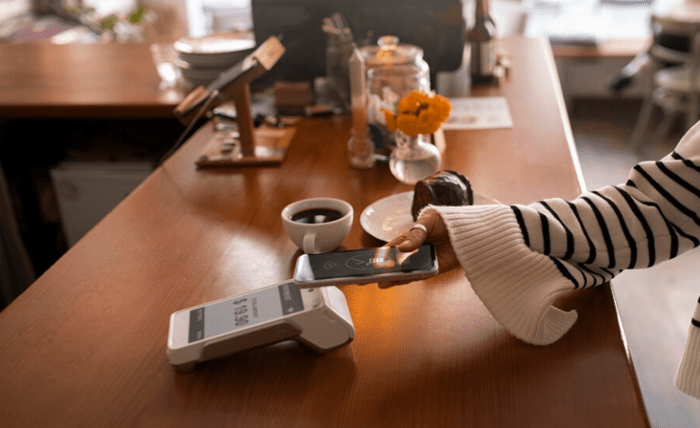
Gone are the days when a cash register and a ledger book were the main aspects of every retail and hospitality business. The point of sale (PoS) system marks a significant leap forward, bringing technology to the forefront of customer transactions and business operations.
Today, we stand at a crossroads between traditional PoS setups, with their physical buttons and printed receipts, and smart PoS systems, which offer touchscreen interfaces, cloud connectivity, and other features.
But as a business owner, you might wonder, “Which system is the right fit for my business operations?” Is the cutting-edge smart PoS system the best choice for your business, or does the reliability of a traditional PoS setup better meet your needs?
Let’s explore the advantages and considerations of each to help you decide on your business’s future.
What is a smart PoS system?
A smart PoS system represents the next generation in transaction technology. It connects internet connectivity with various integration capabilities to create a multifunctional platform. Unlike its predecessors, a smart PoS doesn’t just process payments.
A smart PoS system is a comprehensive business management tool that supports various payment methods, including:
- Contactless
- Chip and PIN
- Mobile wallets
- Online payments
The USP of an intelligent PoS system lies in its ability to provide real-time data analytics, offering insights into sales trends, customer behaviour, and inventory levels. Smart PoS systems improve the customer experience through features like digital receipts, loyalty programs and personalised marketing.
With built-in inventory management capabilities, these systems help businesses efficiently track stock levels, automate ordering, and reduce wastage. By integrating various business operations into one device, smart POS systems offer convenience and efficiency that can significantly boost business performance and customer satisfaction.
What is a traditional PoS system?
A traditional PoS system is designed to handle the basics of sales transactions in retail and hospitality settings. These systems typically include a cash register, a receipt printer and a basic inventory management module that allows businesses to track stock levels manually. Traditional PoS systems are known for their reliability and simplicity, offering a simple solution for companies that prioritise ease of use and minimal maintenance.
They need the advanced features and connectivity of smart POS systems. However, their durability and straightforward functionality make them suitable for businesses with simpler operations or those that prefer to rely on something other than digital technology.
The appeal of traditional POS systems lies in their uncomplicated nature. They provide a stable and effective way to process sales without the need for internet connectivity or complex setups. For some businesses in areas with unreliable internet access or those that value simplicity, traditional POS systems remain a preferred choice. They offer a dependable method to manage daily transactions.
How do they differ?
When choosing between a smart POS and a traditional POS system, weighing their differences across various aspects is crucial. Here’s a concise comparison:
| Metric | Smart PoS | Traditional PoS |
| Cost | Generally higher upfront cost due to advanced features and technology. It may also include monthly fees for software subscriptions | Lower initial cost, primarily hardware purchase expenses. Less likely to require ongoing subscription fees |
| Functionality | Offers many functionalities, including multi-payment support, loyalty programs, customer management, and seamless integration with other business tools | Focused on basic functions like processing sales and printing receipts. Limited support for modern payment methods and additional business tools |
| Flexibility | Highly flexible and adaptable to various business needs. Can easily integrate with new technologies and services | Limited flexibility. Upgrades or changes to the system may require significant hardware changes or complete replacement |
| User experience | Typically features a more intuitive, user-friendly interface with touchscreens and customisable menus. Enhances both the customer and employee experience | Simplicity can be an advantage for businesses with fundamental needs, but the user experience might need to be updated compared to modern alternatives |
| Inventory management | Advanced inventory management features, including real-time tracking, automatic reordering, and detailed analytics | Offers basic inventory management capabilities, which might require manual input and updates |
| Data and analytics | Provides real-time data analytics and insights into sales trends, inventory levels, and customer preferences | Limited or no real-time data access, making gathering actionable insights easier with additional tools |
Choosing between a smart PoS and a traditional POS system depends on your business’s specific needs, budget, and long-term goals. Smart PoS systems offer features and flexibility to drive growth and enhance operations. Traditional PoS systems remain a reliable and straightforward solution for businesses with simpler needs.
Which businesses benefit most from smart POS systems?
- These are beneficial for businesses that require a dynamic and integrated approach to sales, inventory, and customer management.
- Smart PoS are invaluable for retail stores with both physical and online presence. They offer syncing inventory and sales data across channels, ensuring consistency and accuracy.
- Restaurants that incorporate online ordering and reservations benefit from managing orders from various sources directly through their PoS system.
- Service-based businesses, such as salons and spas, reap significant advantages by utilising smart PoS systems for appointment bookings, billing, and loyalty program management.
What to consider before making the switch?
Deciding to upgrade to a smart PoS system involves careful consideration of several factors.
- Assessing your business needs and understanding which features will benefit your operations and customer experience are paramount
- Budget constraints must be addressed. Evaluate the potential return on investment that a smart Po system could bring, factoring in the initial costs, long-term savings and efficiency gains
- Compatibility with existing systems is important for a smooth transition and continued operation
- Consider the ease of use for your staff. A difficult-to-navigate system can hinder rather than help your operations
Is a smart POS system right for your business?
Deciding if a smart POS system fits your business involves carefully evaluating your current operations and aspirations. It’s crucial to consider how the insights we provided in this blog apply to your unique context.
For personalised advice and solutions that cater to your specific needs, consulting with leading providers like Pine Labs can offer valuable perspectives. They understand the nuances of transitioning to a smart PoS system and can guide you through decision-making, ensuring your choice supports your business goals.
So, are you considering upgrading to a smart POS system? Explore Pine Labs’ solutions, including the all-in-one PoS terminal and Android PoS terminal, today.
